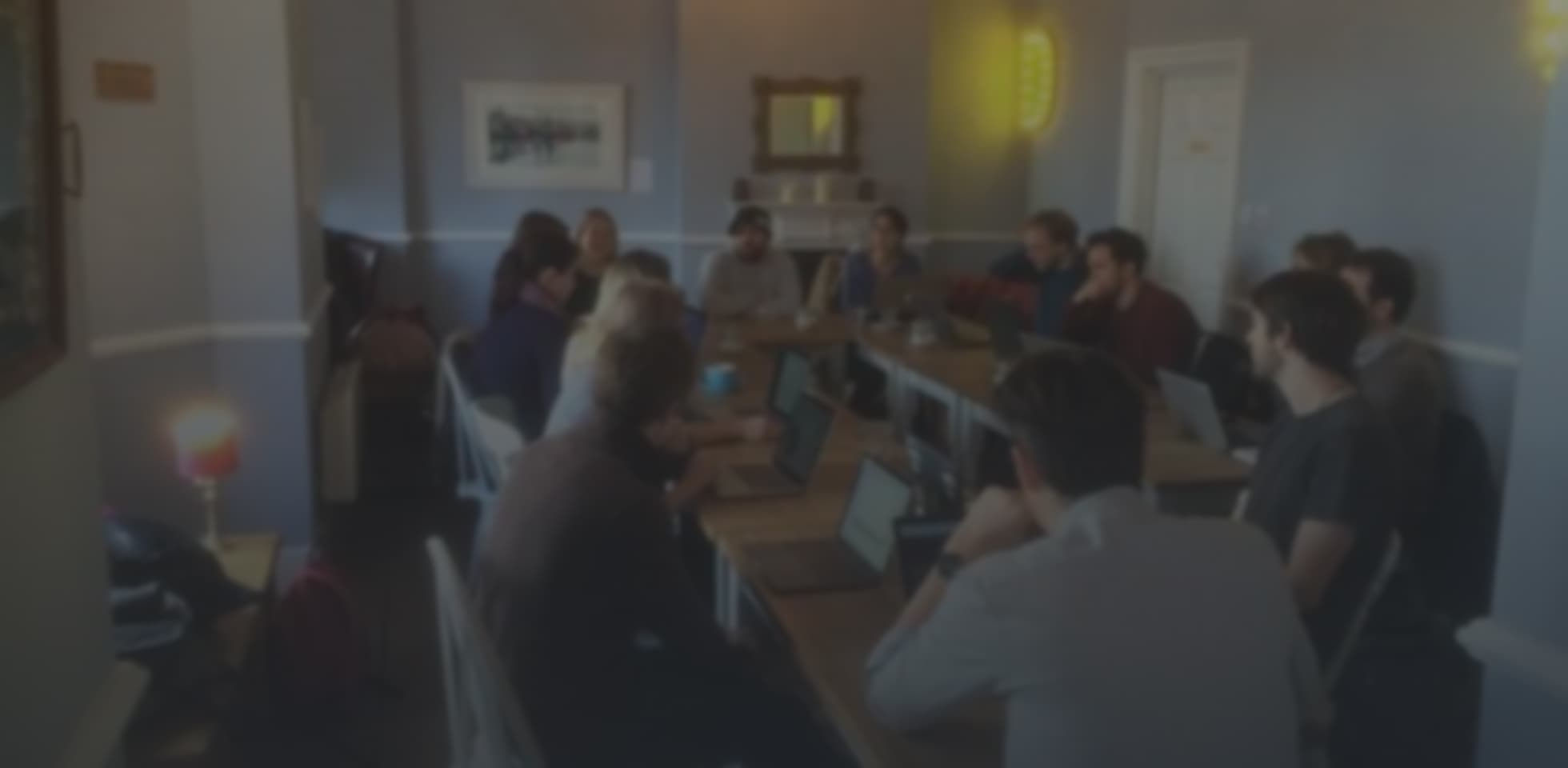
Mentor to aspiring designers and developers at CodeHub
At CodeHub, I joined as a mentor and conducted workshops covering a wide range of topics, from functional programming in TypeScript to organising research repositories. One of the most successful workshops I facilitated was centred around designing and building a content API and front-end for Bristol Tech Fair, a platform aimed at providing educational resources about STEM subjects for children. Throughout the project, my role involved management and mentoring for all the collaborators involved.
Mentored 18 developers and 1 designer through an end to end web development project. All now in full time employment and used this project during their interview process.
The designer on the team had recently completed a UX bootcamp and had strong illustration skills. To optimise her skillset for collaborative design team environments, we focused on addressing the gaps in her knowledge. We adopted a structured approach, emphasising component-driven design principles. Working together, we deconstructed her initial mock-ups to help her grasp proper UI structuring and componentization. Additionally, she led the creation of a design system with my guidance.
Open Figma Project The BTF mascot
I also led the engineering effort, one thing I’d observed from my time mentoring people looking to get in to the industry is a lack of work on codebases multiple engineers are contributing to. This means the first time someone experiences a proper testing suite and CI pipeline is on the job.
For the back-end, we utilized Node.js with Express and MongoDB to create a robust REST API. On the front-end, we leveraged React along with Storybook, enabling engineers to seamlessly translate the component-driven Figma design into code. To ensure adherence to best practices and facilitate a realistic production codebase experience, both repositories employed strict linting rules combined with Git hooks.
Open Github OrganizationOutcomeWhile the Bristol Tech Fair project was not released to the public, the primary objective of this endeavour was not the launch itself but rather the learning and growth it facilitated. Out of the 19 participants involved, all of them have successfully transitioned into full-time employment. Although individual brilliance played a significant role in their achievements, each participant cited the Bristol Tech Fair project as a standout example during their interview process.
- Adjusting linting Rules: In hindsight, it would have been beneficial to adopt a slightly less strict linting configuration. The abundance of red error messages proved overwhelming for some beginners, potentially hindering their learning experience.
- Dockerization for Simplified Setup: To mitigate issues encountered during local setup, Dockerizing the project would have been advantageous. This would have provided a standardised and simplified environment for all contributors.
- Leveraging Third-Party Services: While the project's objective did not solely focus on achieving a live deployment, incorporating more third-party services could have expedited the development process. This would have allowed us to showcase a live version of the project, further enhancing the learning experience.
Lessons learned